
LAUNCH
System Launch Logic: From Land to Market
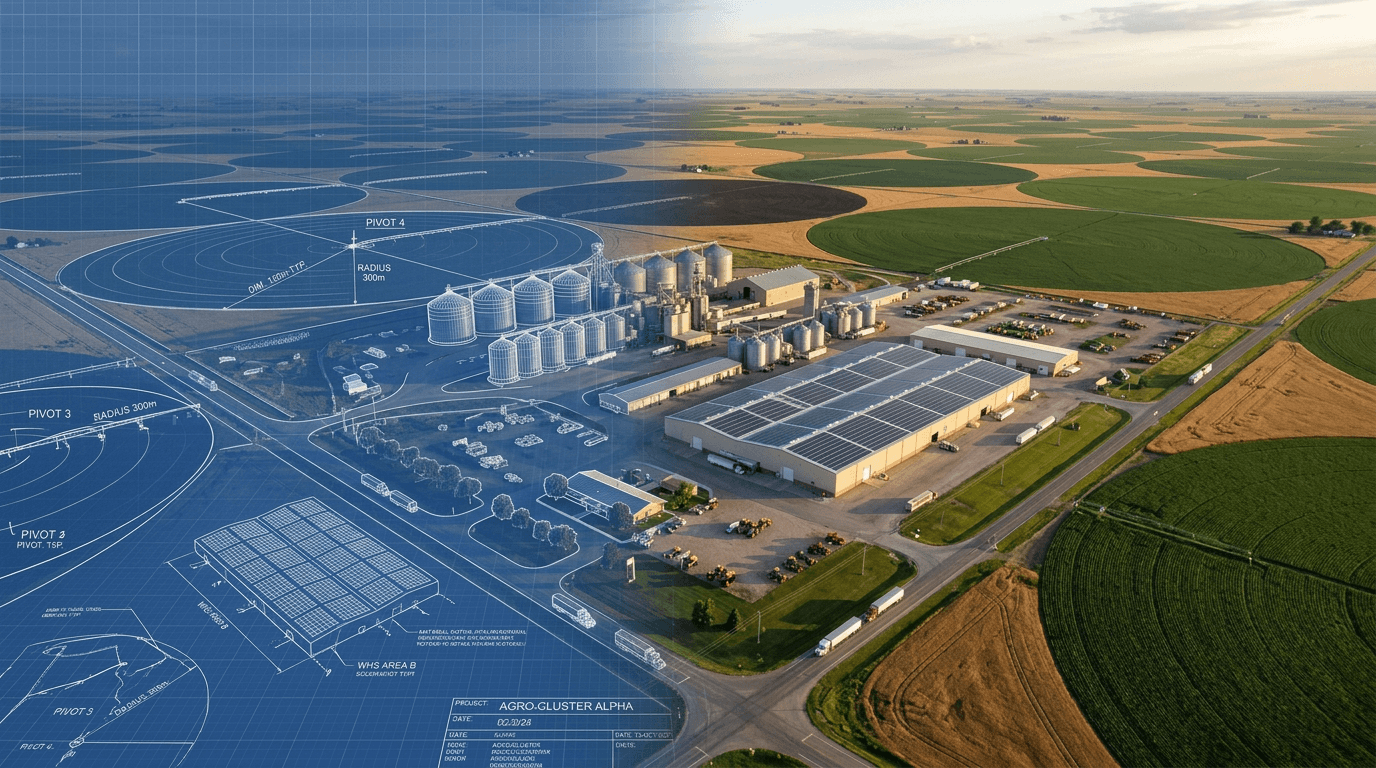
This is the BioSingularity cluster blueprint - the sequenced logic by which a 100,000-hectare cluster is designed and brought online. It describes how the system is engineered, not a site already in operation. Every component of this cluster is sequenced to eliminate single points of failure. Infrastructure is established before production begins. Storage capacity comes before processing. The full chain from land title to finished goods on the domestic market is engineered as a single system, not a collection of independent projects.
Land & Water
Site selection, soil analysis, and full hydrological engineering
Infrastructure
Roads, energy, pump stations, drainage, and service base
Production
First wheat cycle, then soya - managed digitally from sowing to harvest
Processing & Market
Storage, milling, oil extraction, feed production, and distribution
STAGE 1
Site Selection & Land Consolidation
A contiguous 100,000-hectare territory is identified, assessed, and integrated into a single managed operating perimeter - transforming raw land into the foundation of an integrated food system. The consolidation process goes beyond land acquisition: it establishes the physical, logistical, and agronomic preconditions for everything that follows.
Site selection criteria are non-negotiable. Every candidate territory is evaluated against access to water sources, proximity to road and energy networks, domestic market connectivity, and the feasibility of full-scale land consolidation under a single operational entity. Soil profiles, relief, climate data, and hydrology are analyzed in parallel before any commitment is made.
Infrastructure Access
Water, roads, energy, and domestic market proximity
Consolidation Feasibility
Large-scale land assembly within a single managed perimeter
Agronomic Assessment
Soil, relief, climate & hydrology analysis
Master Plan Formation
Binding spatial and operational framework for all development phases
STAGE 3
Core Infrastructure Construction
With engineering designs locked, physical construction follows a strict build sequence. Each layer of infrastructure must be operational before the next can begin: drainage before roads, water intake before pump stations, and power before service facilities. This sequencing eliminates rework and ensures the cluster comes online as a functioning system, not a patchwork of disconnected assets.
Field Preparation & Levelling
Earthworks, grading, and drainage channel construction across all production zones
Drainage System
Underground and surface drainage networks installed to specification
Water Intake Structures
Primary diversion and intake works commissioned at water sources
Pump Stations
Main and secondary pump stations installed and tested
Reservoirs & Main Water Lines
On-site storage and primary distribution pipelines brought online
Power Supply
Electrical infrastructure extended to pumps, warehouses, and processing facilities
Internal Roads & Turning Zones
All-weather field access roads and machinery turning areas completed
Equipment Service Base
Maintenance workshop, fuel storage, and parts depot operational
Outcome: physical foundation complete - water, energy, roads, and service infrastructure ready for equipment deployment
STAGE 5
First Production Cycle - Wheat
Wheat is the first crop deployed across the cluster, establishing baseline agronomic performance, calibrating irrigation and nutrition programs, and generating the first revenue stream. As the source of flour - the cluster's primary staple product - wheat anchors the entire commercial model. The 10-stage production cycle runs from soil preparation through drying and storage, with digital monitoring at every step.
Soil Preparation
Tillage and pre-plant conditioning based on soil mapping outputs
Base Nutrition
Pre-sowing fertilizer application according to agrochemical prescription
Sowing
Precision seeding at optimal depth and row spacing for the field zone
Irrigation Management
Phase-specific water delivery aligned to growth stage demand
Satellite & Drone Monitoring
Continuous crop condition assessment and early stress detection
Crop Protection
Targeted fungicide, herbicide, and pesticide applications as required
Yield Forecasting
Pre-harvest biomass modeling to optimize combine deployment scheduling
Harvest
Fleet-coordinated grain cutting, threshing, and field transport to elevator
Primary Cleaning
Foreign material removal at intake to protect storage quality
Drying & Storage
Conditioning to safe moisture levels and allocation to dedicated silos
Outcome: first industrial wheat batch ready for storage and milling - cluster revenue model activated
STAGE 6
Second Production Cycle - Soya
Following wheat harvest, fields are immediately prepared for soya - a complementary rotation that improves soil nitrogen balance, diversifies the revenue base, and unlocks the oil and protein processing stream. Soya production follows the same 10-stage managed cycle, with phase specific irrigation protocols and targeted protection programs calibrated to soya's distinct growth requirements.
Where wheat delivers flour, soya delivers crude oil, soya meal, and compound feed ingredients. Together, the two crops create a multiproduct output structure that captures margin across food, feed, and ingredient markets simultaneously.
Post-Wheat Field Prep
Nutrition and moisture correction before soya sowing
Phase-Managed Irrigation
Growth-stage aligned water delivery for optimal pod fill
Stress & Disease Protection
Monitoring-led crop protection interventions throughout season
Harvest to Storage
Yield forecast, combine harvest, cleaning, drying, and silo allocation
Outcome: soya batch ready for oil extraction and meal production - protein and oil revenue stream online.
STAGE 7
Storage & Raw Material Preparation
Controlled storage is not a passive holding function - it is the quality gateway between field production and processing. Every batch entering the cluster elevator system is tracked by origin, volume, moisture content, and quality grade. Only material that meets specification advances to processing; everything else is reconditioned or redirected. This traceability layer protects product quality and processing yields throughout the system.
Cleaning
Foreign material and dust removed at intake
Drying
Moisture conditioned to safe storage levels
Sorting
Grade separation by quality parameters
Batch Allocation
Assigned to processing destination by crop and grade
Outcome: raw material fully controlled within the cluster - quality-verified and prepared for processing.
STAGE 8
Processing - From Raw Commodity to Value-Added Product
Processing is where the cluster's financial logic is made explicit. Raw wheat and soya are worth commodity prices. Flour, soya oil, soya meal, and compound feed command fundamentally different margins. By capturing processing within the cluster perimeter, the project retains value that would otherwise leave the system at the farm gate.
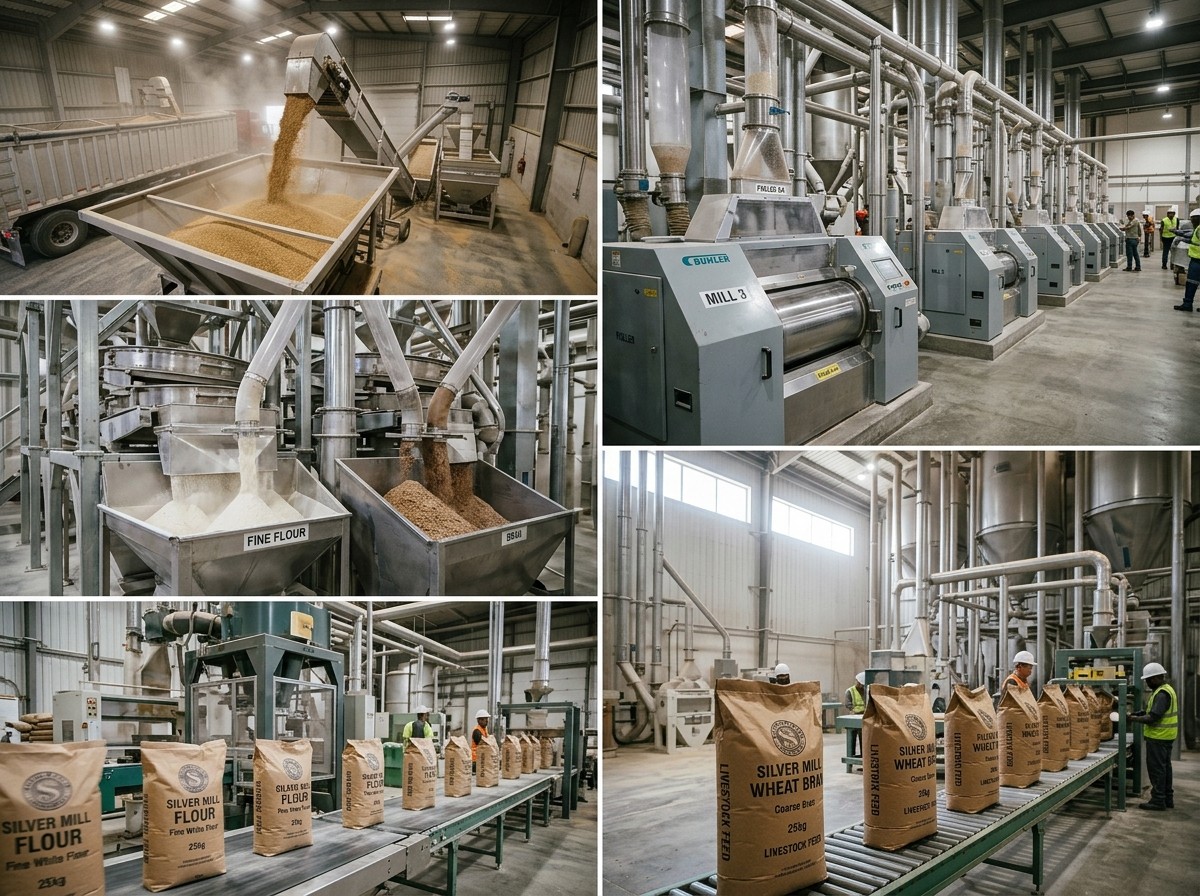
Step 1
Wheat to Flour & Bran
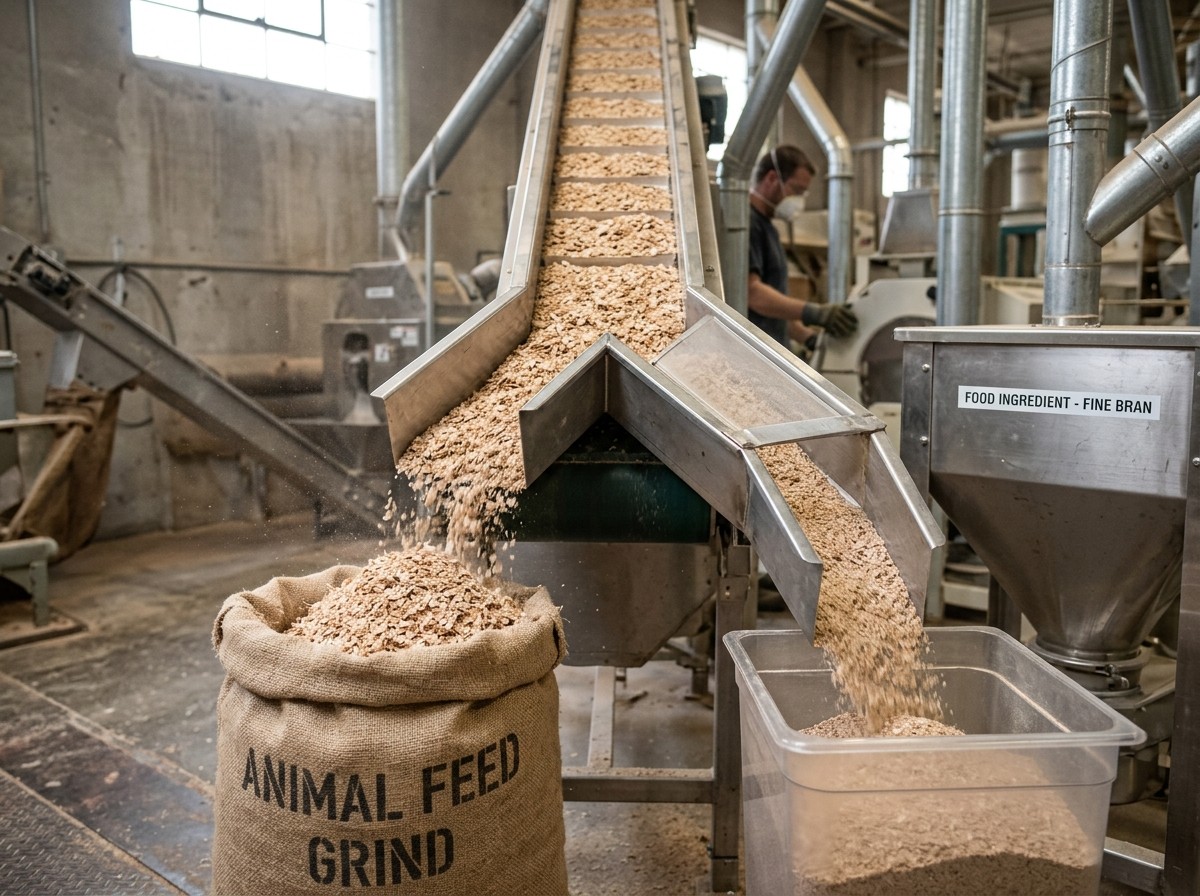
Wheat is milled into white flour for industrial food consumers and retail packers. The milling byproduct - bran - is captured as a high-value feed and food ingredient rather than discarded.
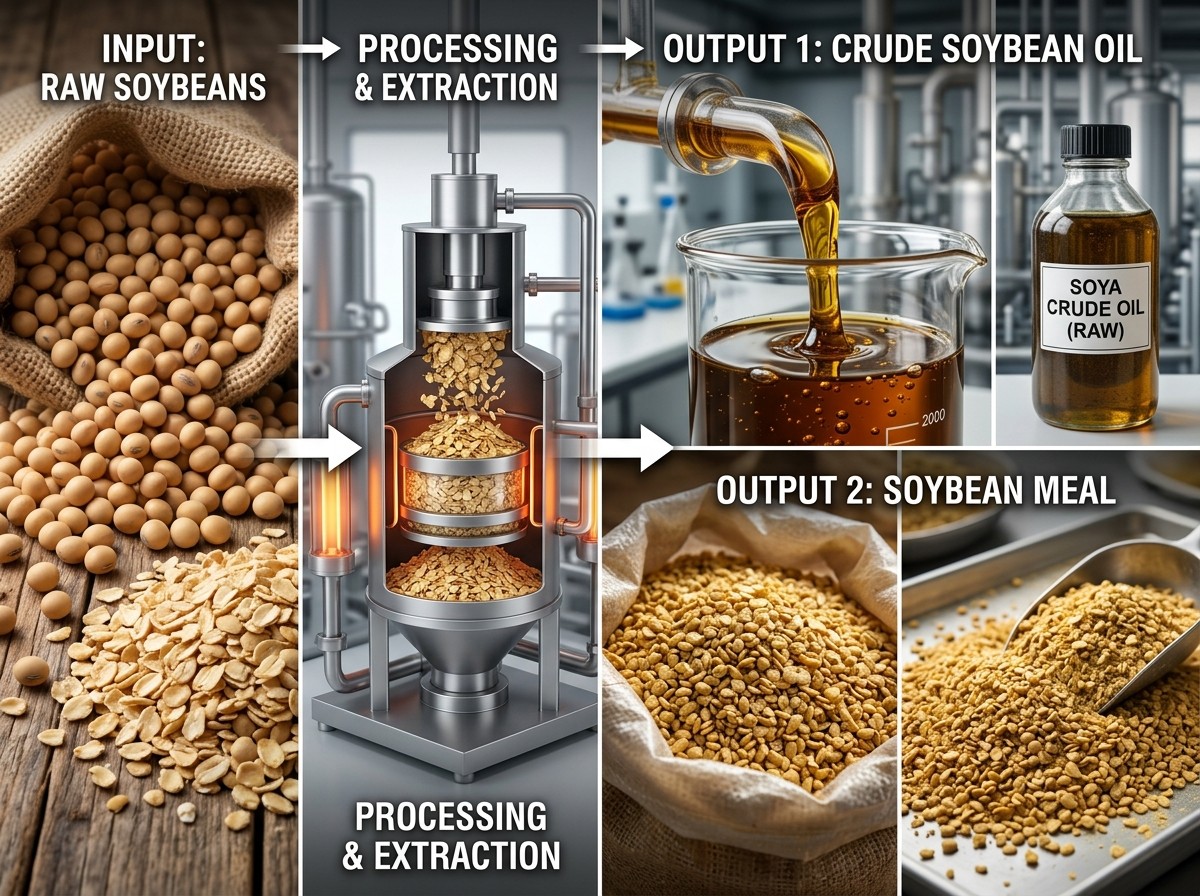
Step 2
Soya to Crude Oil & Meal
Soya beans are pressed and solvent-extracted to produce crude soya oil for food processors and retail chains, and high-protein soya meal for compound feed plants and aquaculture operations.
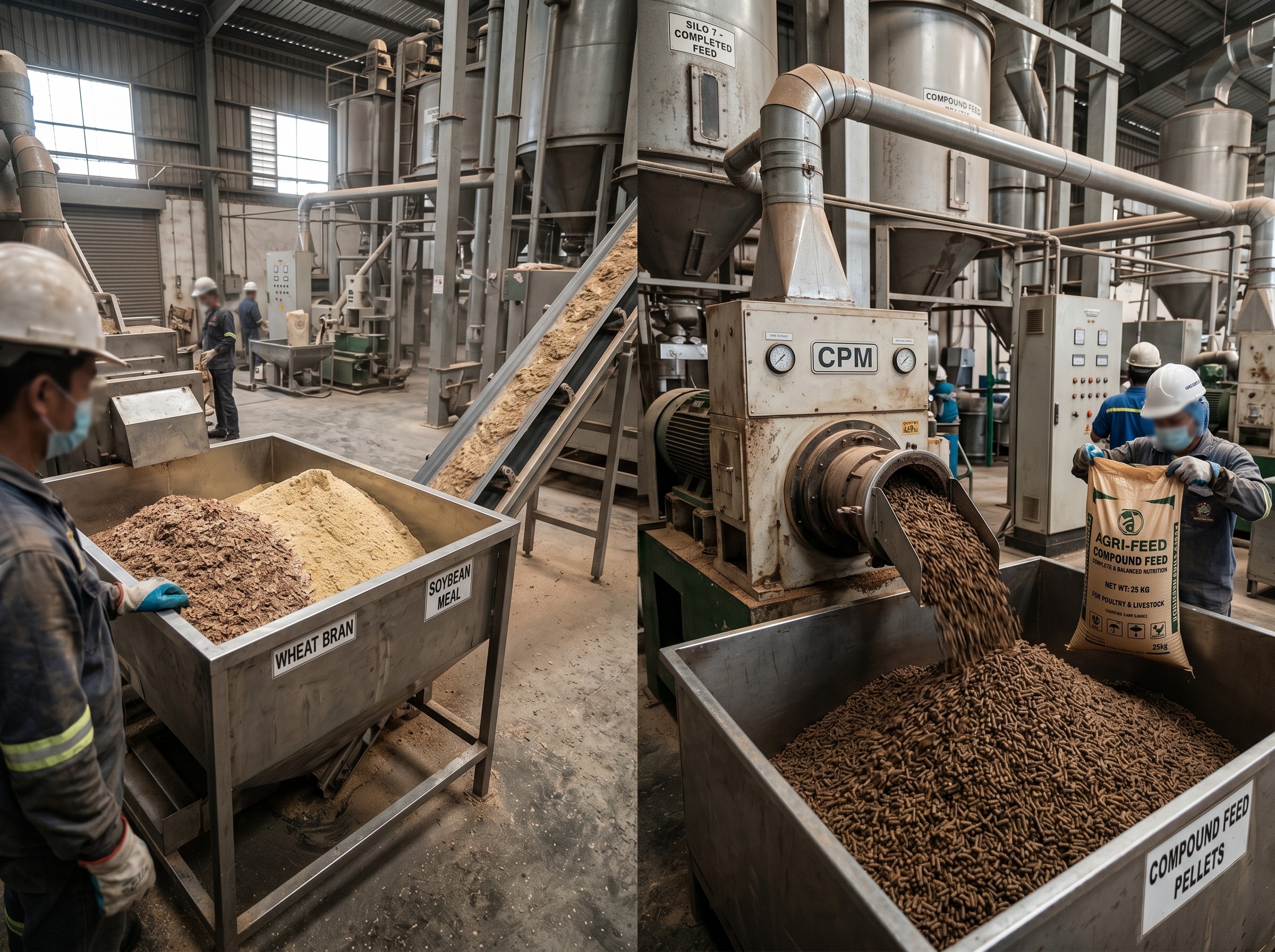
Step 3
Meal + Bran to Compound Feed
Soya meal and wheat bran are combined and pelleted into compound feed - a finished product delivered directly to poultry, livestock, and aquaculture operations.
Outcome: the cluster sells finished products - not raw commodities. Margin is captured internally at every processing step.
STAGE 9
Packaging, Distribution & Complete Food System
The final stage closes the loop from 100,000 ha of managed land to a portfolio of finished goods reaching the domestic market. Five distinct product streams exit the cluster, each with its own buyer category and commercial pathway. This is not a farm that sells grain - it is an integrated food infrastructure with full-chain margin capture.
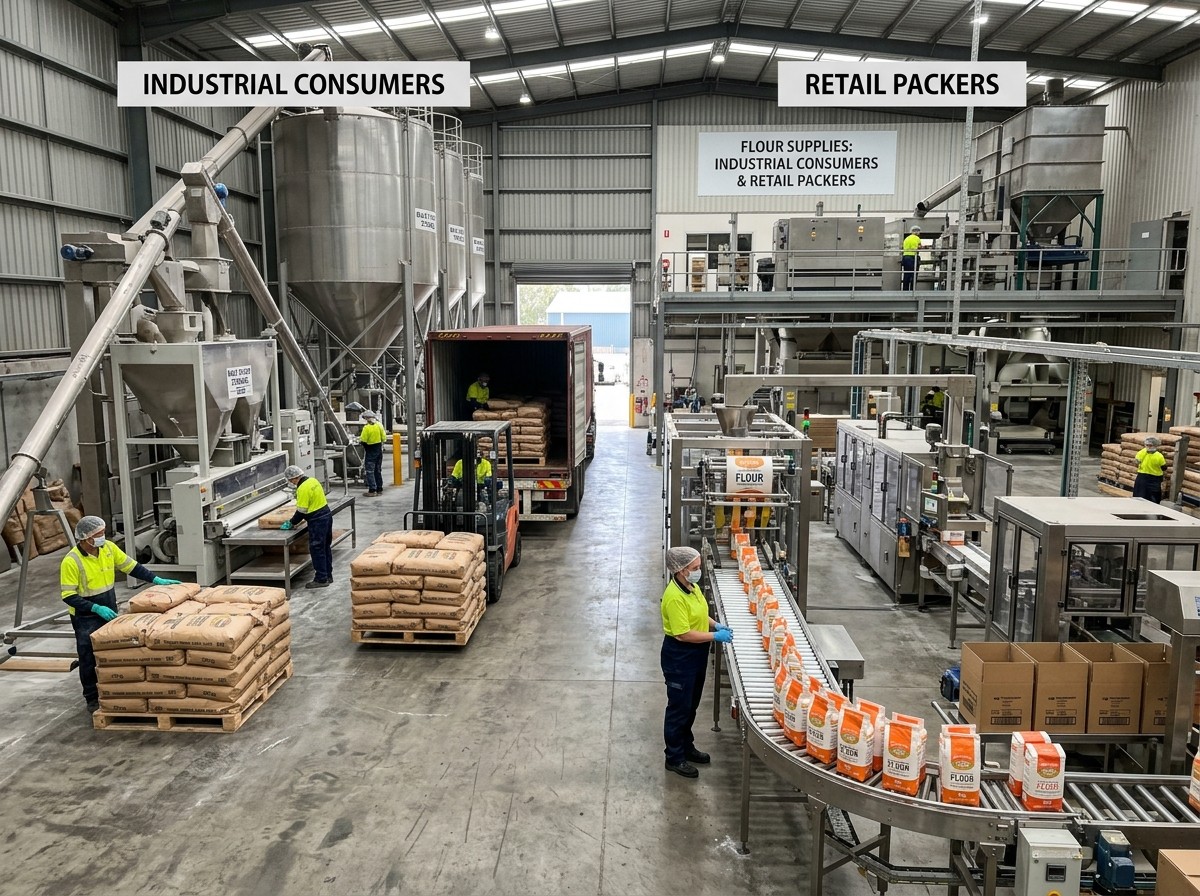
Step 1
Flour to Industrial Consumers & Retail Packers
Milled to specification for bakeries, pasta producers, and food manufacturers. Bulk and bagged formats for domestic wholesale and retail channels.
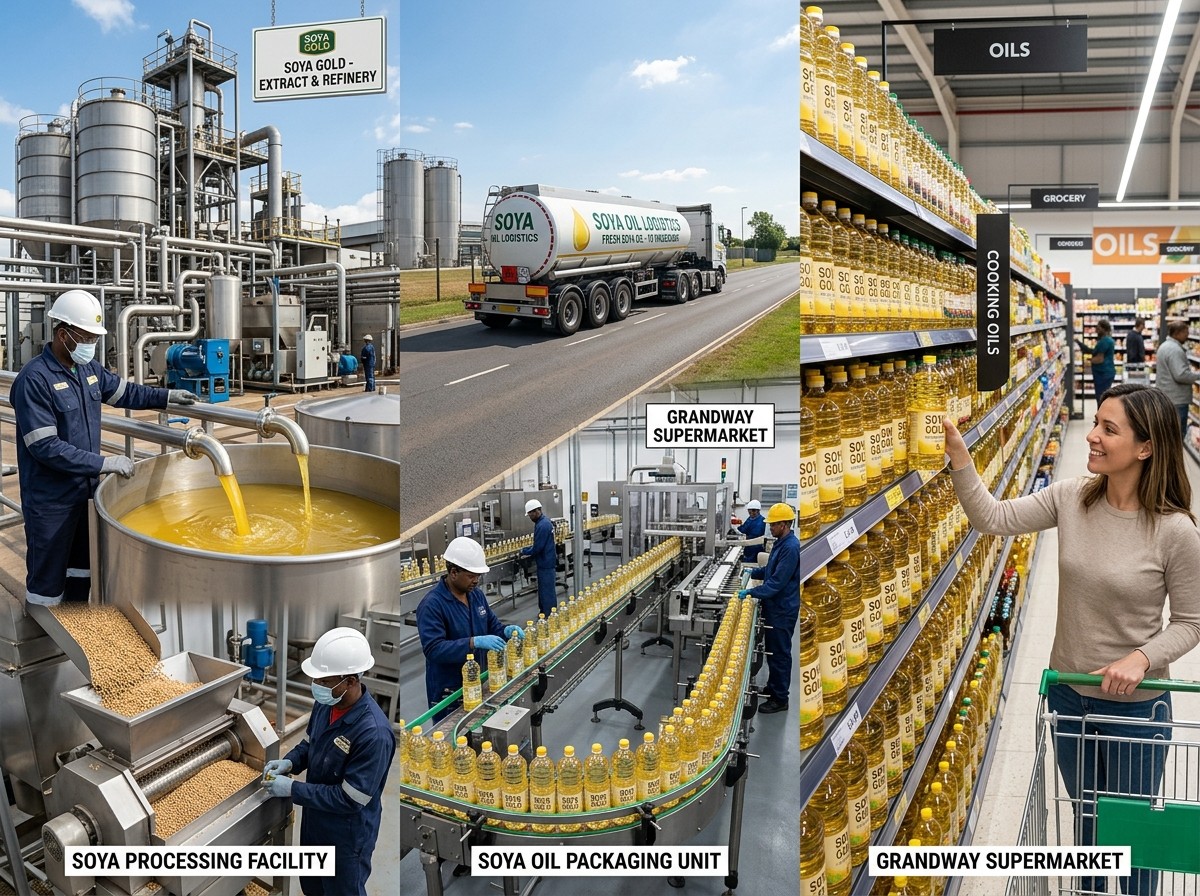
Step 2
Soya Oil to Processors & Retail Chains
Refined crude oil delivered to food processors and bottled for retail distribution. One of the cluster's highest-margin output streams.
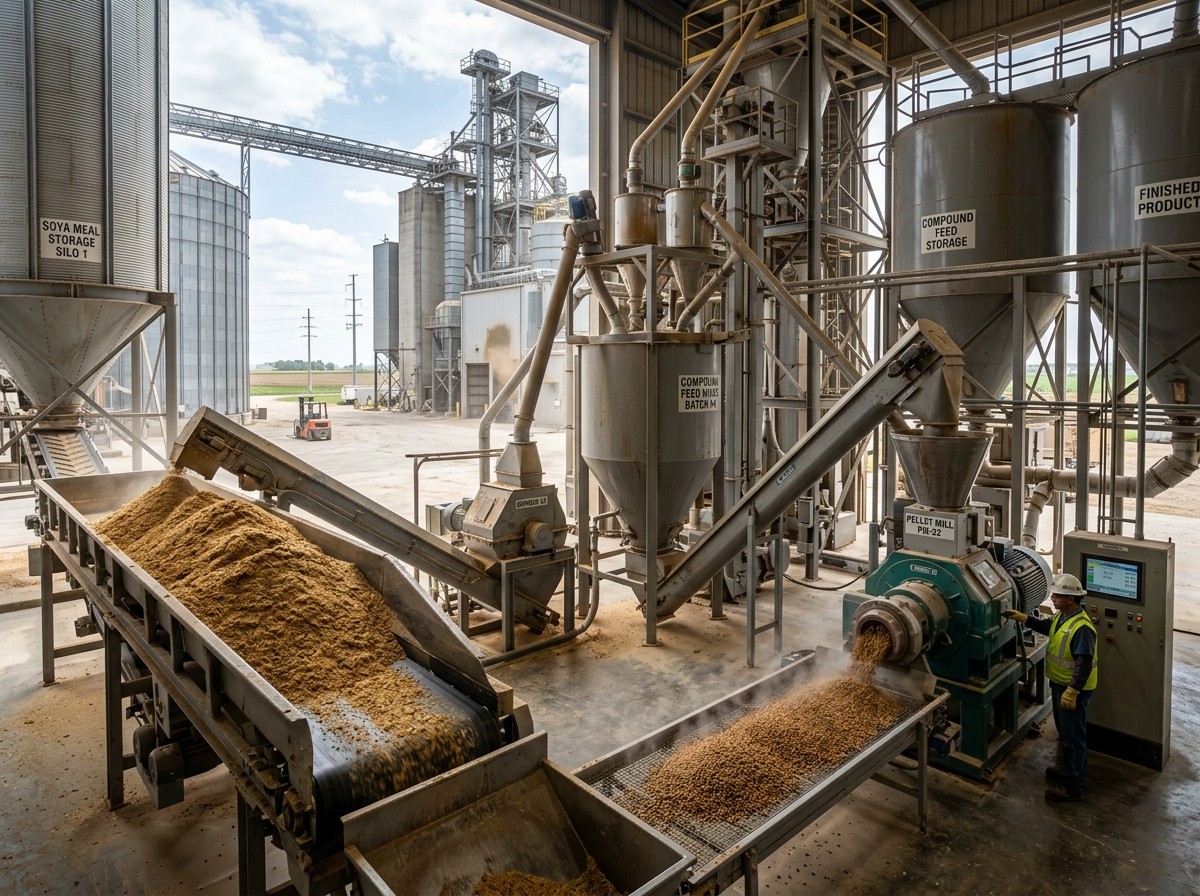
Step 3
Soya Meal to Compound Feed Plants
High-protein meal supplied to integrated feed mills and third-party compound feed manufacturers for poultry and livestock rations.
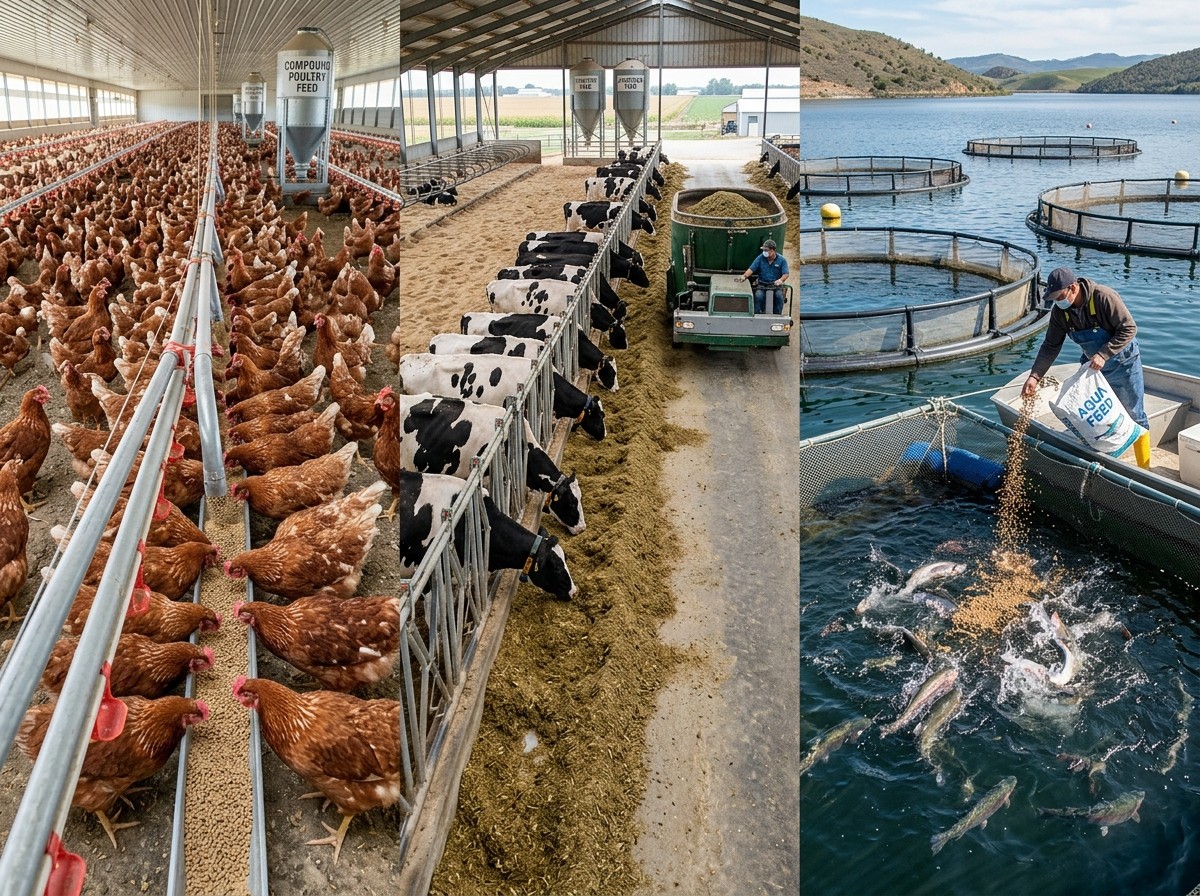
Step 4
Compound Feed to Poultry, Livestock & Aquaculture
Pelleted compound feed produced on-site and delivered directly to end users - eliminating intermediary feed supply chains.
Step 5
Bran to Feed & Food Ingredient Stream
Captured from the milling process and sold as a functional ingredient for both animal feed and specialty food applications.
Outcome: within approximately 4–5 years under favorable conditions, the cluster reaches full industrial capacity - an integrated food infrastructure with land, water, equipment, elevators, processing, digital control, and finished product output serving the domestic market.