
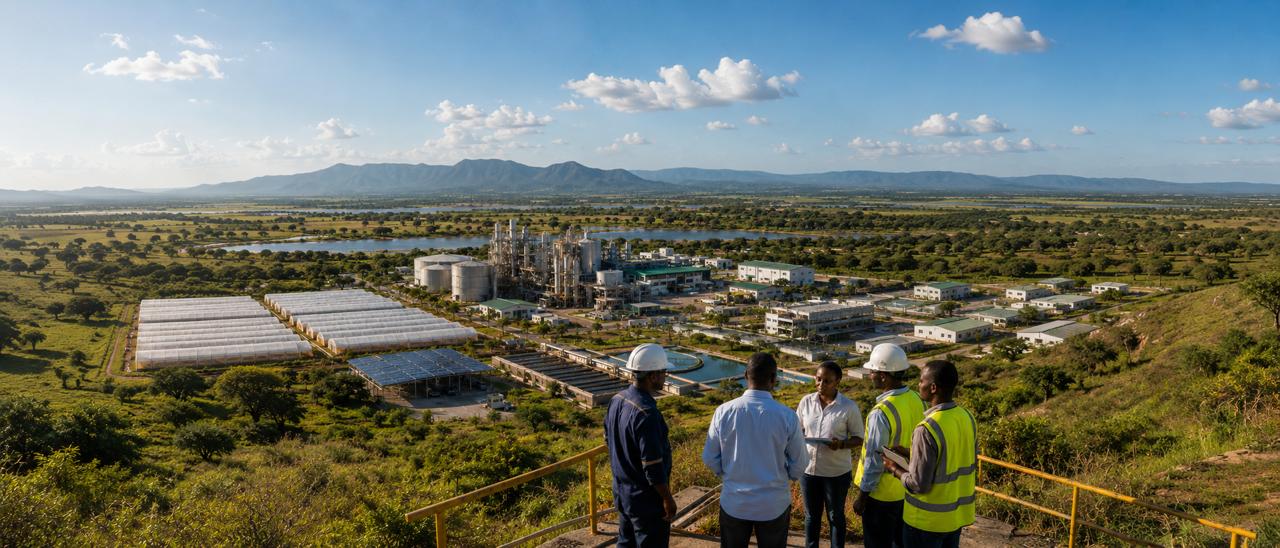
Many sell technology
Few take responsibility for whether the system actually works on the ground - in the local climate and economic conditions of a given country. BioSingularity takes responsibility for the entire cycle: from cluster design to reaching stable operation and transferring management to a local team. We are accountable not only for delivering solutions, but for their performance against defined operational targets.
This is underpinned by a structured methodology
Six sequential steps-from designing a cluster for a specific region to replicating it as a standard module. Three-tier architecture where the industrial core, the production belt, and the digital economy function as a single entity.
We train those who will continue this work on the ground
Our planned Operator Academy is designed to develop local teams capable of managing the cluster independently. The cluster remains in the country - along with the expertise.
WHAT WE DO
Integrated Regional Scale Platform
A single such cluster is capable of:
NATIONAL LEVEL
National Agricultural Transformation Platform

Transformation means integrating the following into one system:
Irrigation
Strategic water control
Regional development
Territorial growth catalyst
Processing
Value-added conversion
Logistics
Integrated supply flow
Digital intelligence
System-wide decision layer
Financing
Bankable investment structure
STEP 1
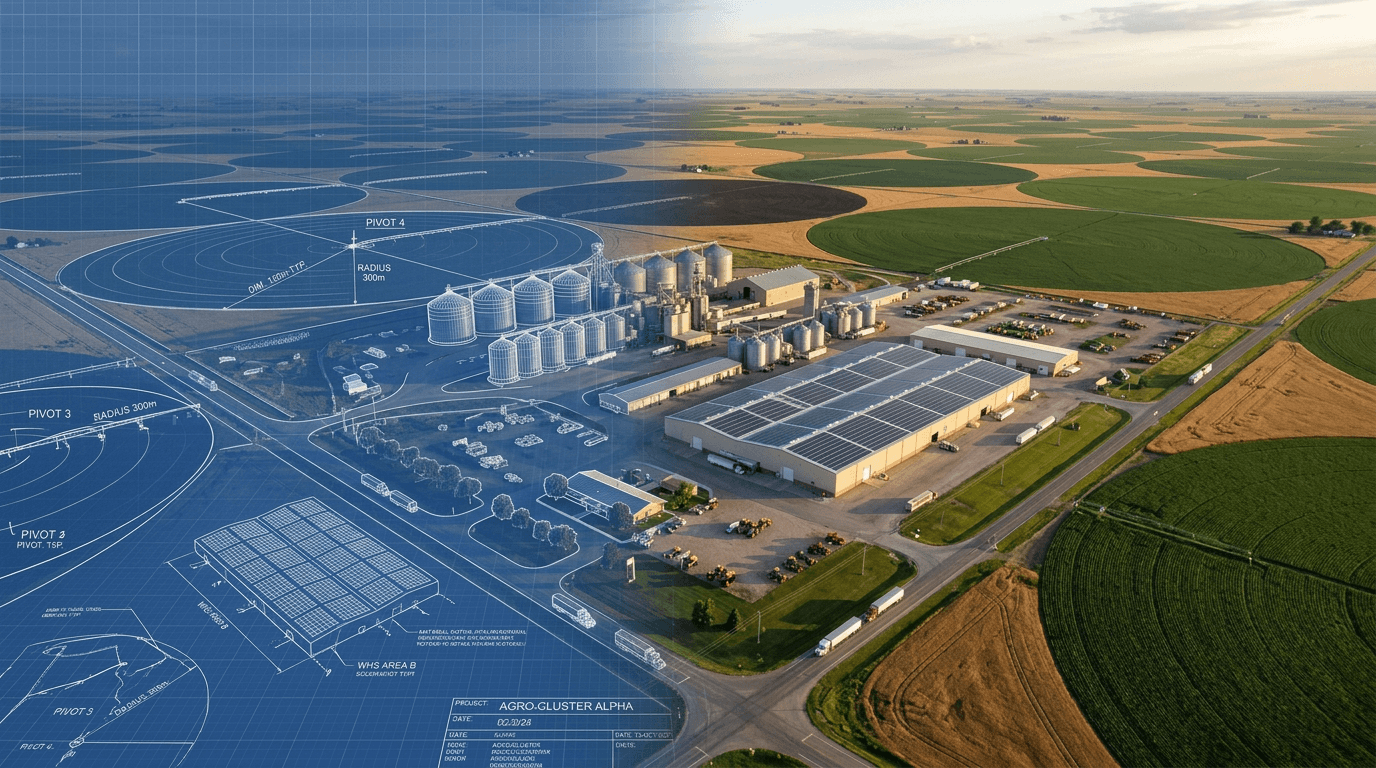
An industrial food cluster tailored to a specific region, climate, and national objectives, designed as a fully integrated 100,000-hectare agro-industrial system with predefined infrastructure, energy, engineering, and production parameters.
Key System Features:
STEP 2
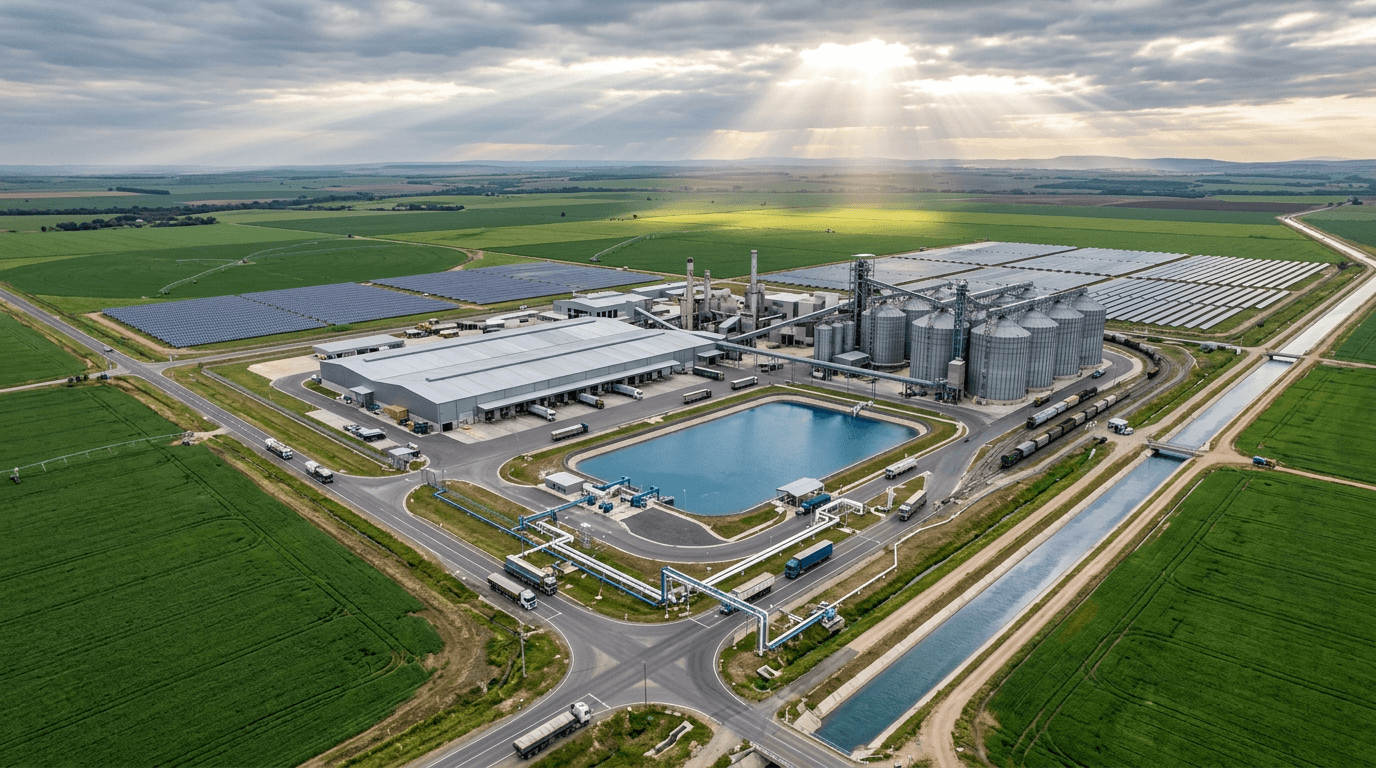
A unified agro-industrial system that integrates water, energy, production, processing, and logistics into one manageable circuit, reducing fragmentation and strengthening long-term production resilience through internal resource cycles.
Integrated System Logic:
STEP 3
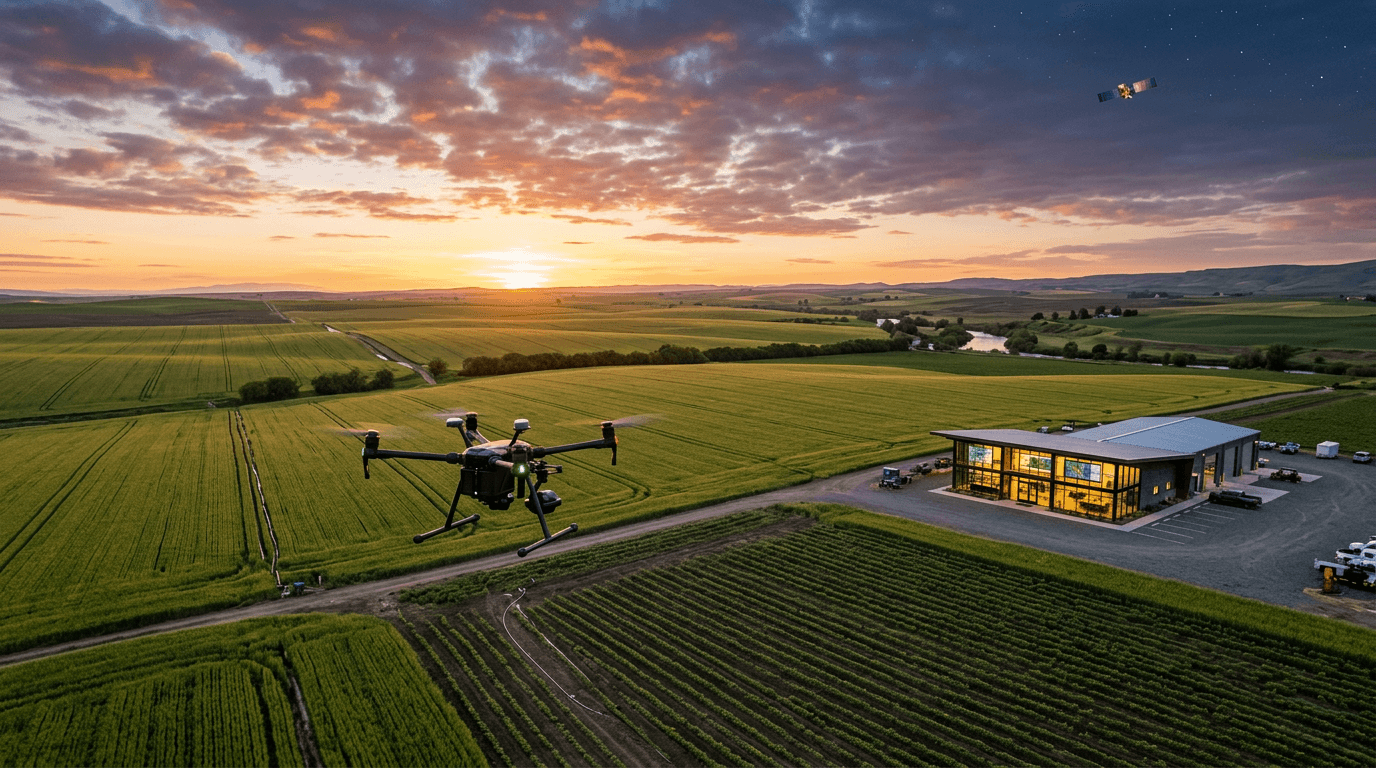
A digital management system that combines satellites, UAVs, AI-driven forecasting, and real-time monitoring to predict, prevent, and control risks across the entire agro-industrial chain.
Digital Control & Transparency:
STEP 4
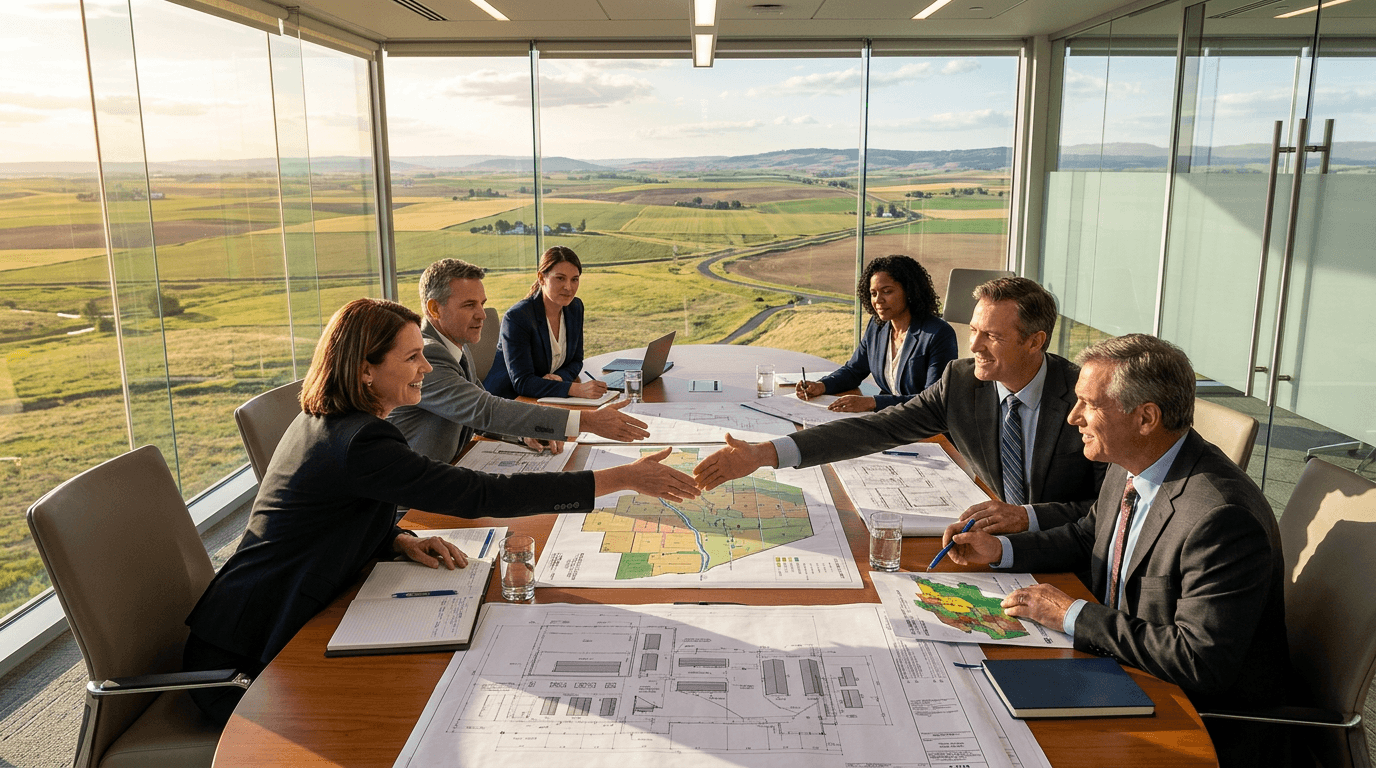
A structured project platform that brings together contractors, technology providers, capital, and public co-investors around a fully developed agro-industrial architecture with a financial model and risk coverage framework.
Stakeholder & Investment Alignment:
STEP 5
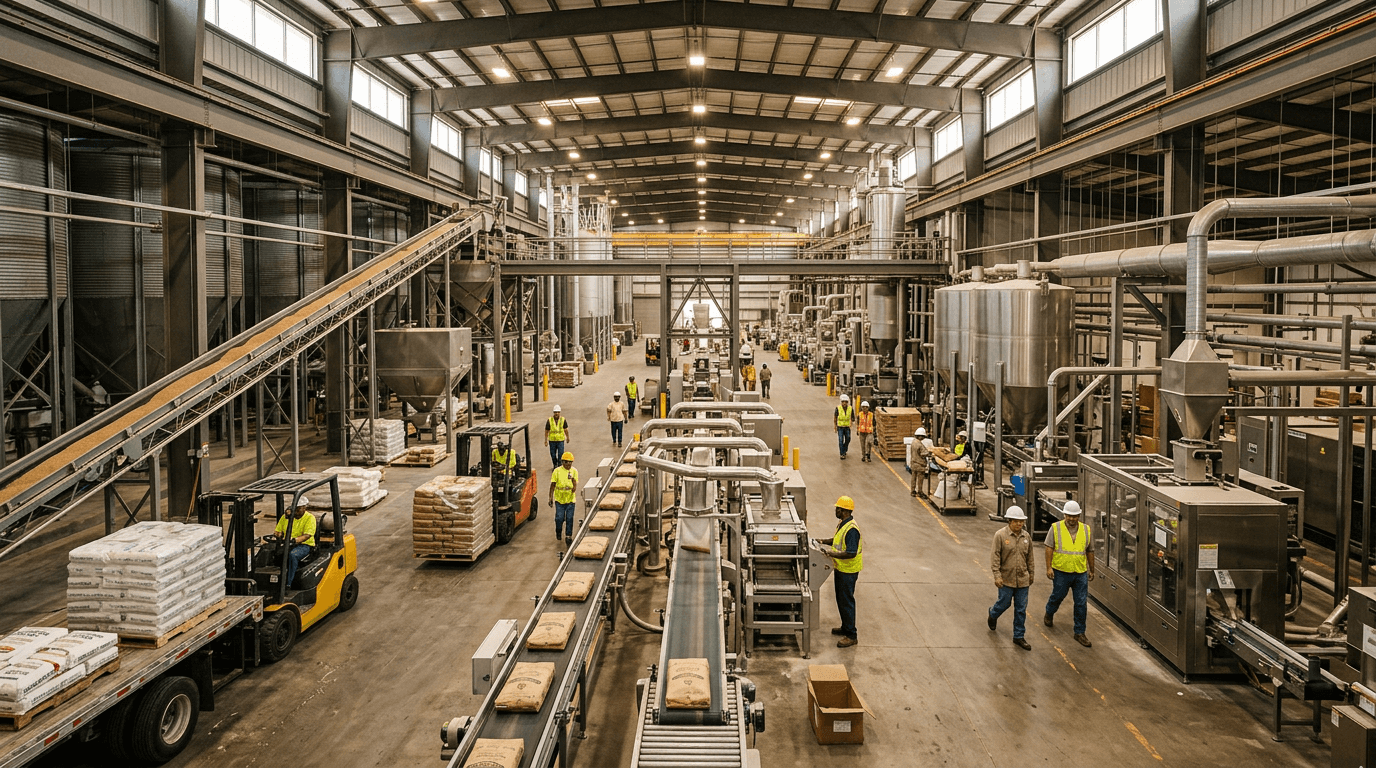
An accountable operating model in which the operator participates in the outcome, ensuring that infrastructure performs effectively and delivers measurable production and efficiency indicators.
Operational Accountability:
STEP 6
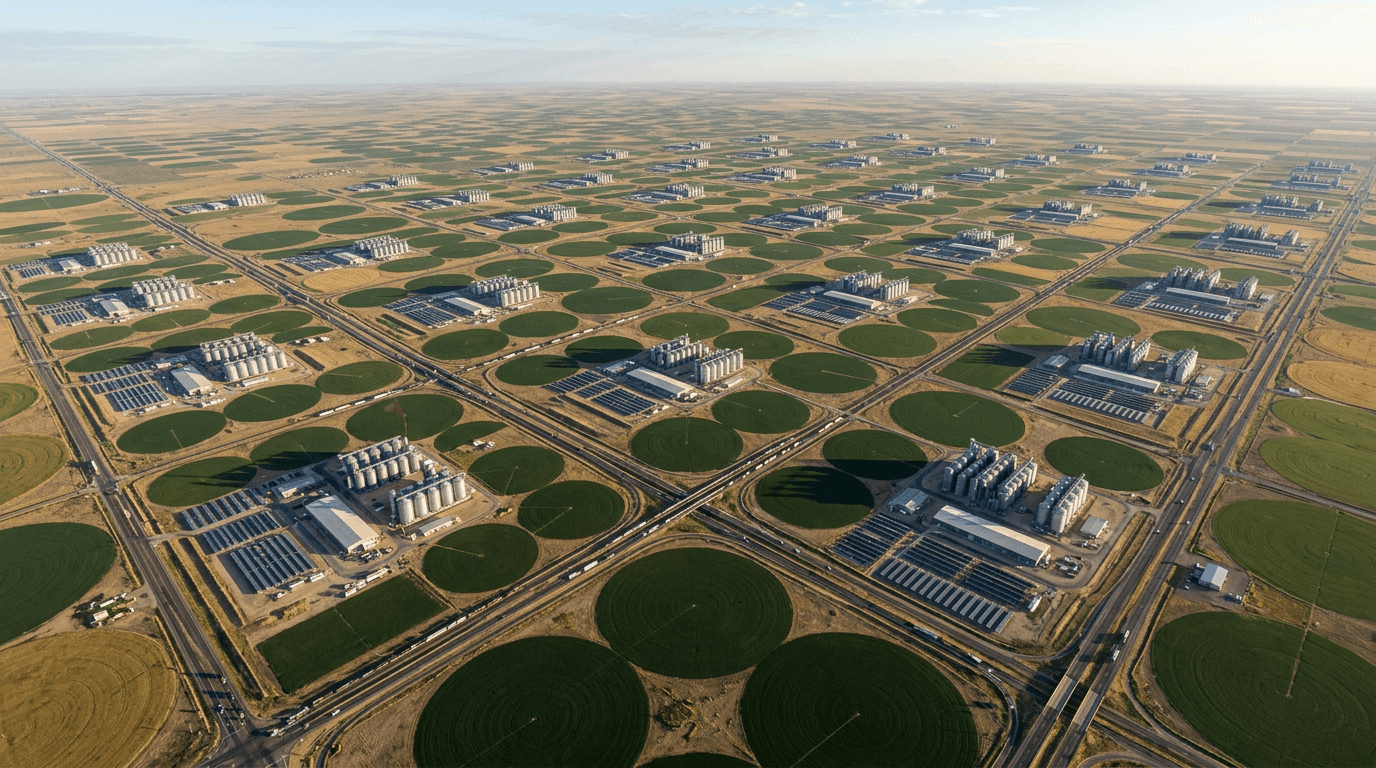
A standardised infrastructure module that allows the cluster model to be replicated across a country or region, transferring proven management, digital systems, and personnel training into new projects without rebuilding from scratch.
Scalable Infrastructure Platform:
SCALABLE PLATFORM

BioSingularity is not designed as a single-project company.
The 100,000-hectare cluster
Is a repeatable infrastructure module that can be adapted to different countries, climates, crops, logistics corridors, investment structures, and national food security objectives
The global need for this model is significant
Dozens of countries require not only capital and technology, but an operator capable of turning fragmented agricultural potential into a functioning food system
As each cluster
Is launched, stabilized, digitally managed, and transferred into local operating capacity, the model becomes easier to replicate. Engineering logic, management systems, digital tools, training programs, financial architecture, and implementation discipline are reused across new regions
This is how BioSingularity scales
From one region, to a national program; from one national program, to a replicable international platform; from agricultural projects, to food security infrastructure
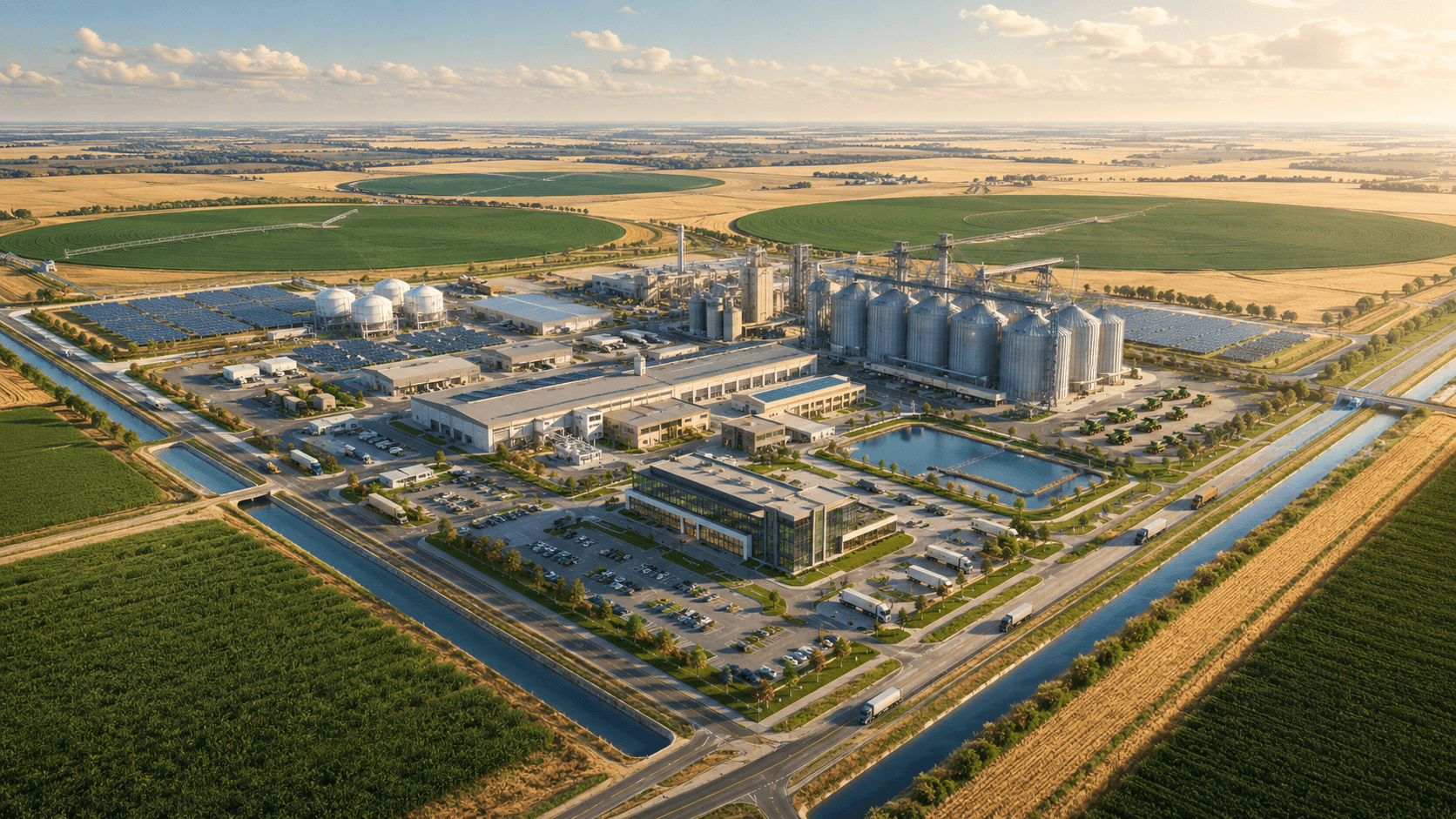
Level 1 - Core
Industrial Cluster

Level 2 - Production
Inclusive Food Production Belt

Level 3 - GROW365™
The Digital Consumer Economy
BIOSINGULARITY'S OPERATOR ACADEMY

As clusters scale, operational capability is replicated through the Operator Academy - BioSingularity's planned training framework for the teams that will launch, stabilize, and manage agro-industrial clusters across regions. It is built around practical execution: digital twins, real production scenarios, and hands-on work with irrigation, machinery, processing, storage, logistics, and digital control systems.
Under the model, each new cluster is to be launched by BioSingularity's international team, which trains local specialists directly during operations. As the system reaches stable operating capacity, selected functions are progressively transferred to the local team.
Operational Capability
SYSTEMS BUILDER
