
BIOSINGULARITY ARTIFICIAL INTELLIGENCE
The Intelligent Layer of Food Infrastructure
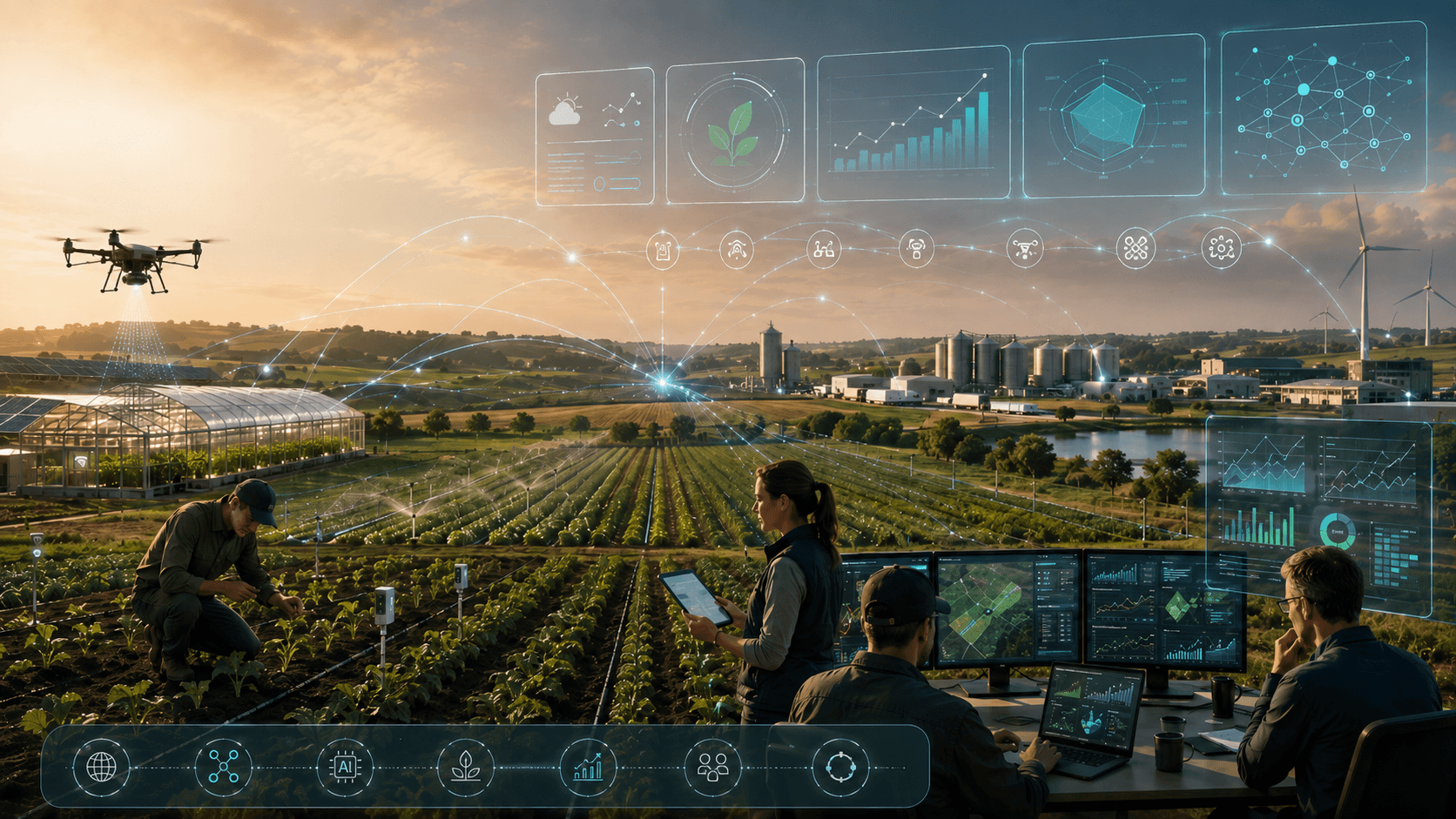
Artificial intelligence is regarded within BioSingularity as a critical layer of the future food infrastructure. It is not presented as a separate product or an independent module, but is embedded into the system architecture as an instrument designed to connect data, processes, and decisions into a unified intelligent management model.
Its purpose is not to replace agronomists, engineers, operators, investors, or the state, but to strengthen their decision-making: to detect deviations earlier, compare scenarios faster, assess risks more accurately, allocate resources more effectively, and improve outcomes from season to season.
BioSingularity is being developed not merely as a digital agricultural platform, but as a learning infrastructure system in which every hectare, season, risk, mistake, and successful decision can become part of accumulated intelligence.
Key points:
AI is embedded into BioSingularity as a strategic layer of future food infrastructure
It connects data, processes, and decisions into a unified intelligent management model
It is not designed to replace people, but to strengthen the decisions of agronomists, engineers, operators, investors, and the state
It helps detect deviations earlier, compare scenarios faster, assess risks more accurately, and allocate resources more effectively
BioSingularity is built as a learning infrastructure system, not merely as a digital agricultural platform
Every hectare, season, risk, mistake, and successful decision can become part of accumulated intelligence
ARTIFICIAL INTELLIGENCE LAYER
Intelligence Designed to Connect the Entire System

BioSingularity is building an architecture of digital tools for managing land, water, production, processing, finance, and impact reporting. The AI layer is the next level of this architecture: it is intended to connect these tools into a unified learning decision-making system.
AI should not be presented as a finished product or just another independent module. It is more accurate to describe it as an intelligent layer above the entire technological ecosystem - a future part of the system that will be able to compare scenarios, identify patterns, prioritize risks, and help the operator make more precise decisions.
The operating system records data. The digital twin models the territory. The irrigation system measures water. Crop Intelligence forecasts yields. ESG systems generate reporting. The AI layer will be designed to learn from this data and transform separate information streams into coordinated management decisions.
Key points:
BioSingularity integrates digital tools for land, water, production, processing, finance, and impact reporting
The AI layer represents the next level of the system architecture
AI is positioned as an intelligent layer above the entire technological ecosystem
It will compare scenarios, identify patterns, prioritize risks, and support more precise decisions
Different system components already generate data: the operating system, digital twin, irrigation, Crop Intelligence, and ESG systems
The AI layer will learn from these data streams and convert them into coordinated management decisions
PREDICTIVE COUNTRY MODEL
Designing the Food System for the Future
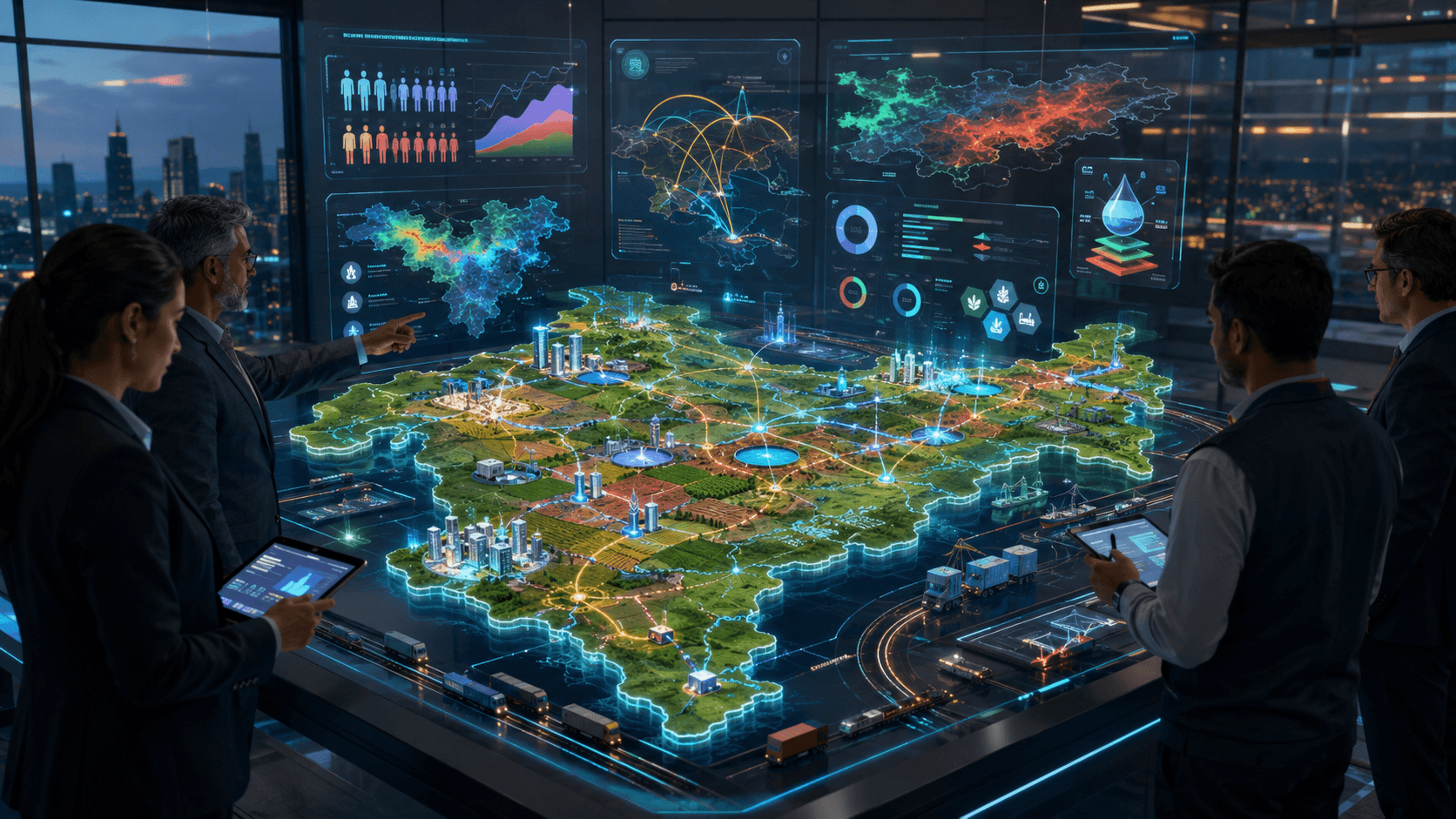
In the BioSingularity technology roadmap, AI is viewed not only as a tool for cluster management, but also as a future mechanism for analyzing a country’s food needs.
A cluster should not be built solely on the basis of today’s shortages, current prices, or the conditions of a single season. It should answer the question: what products, in what volumes, in which regions, and under what climate conditions will the country need in 10, 15, and 20 years?
In the future, AI will be able to connect demographics, migration, climate scenarios, consumption patterns, import dependency, water constraints, logistical risks, and future domestic food demand.
In this way, BioSingularity establishes an approach in which food infrastructure is created not as a reaction to crisis, but as a system for preventing future shortages.
Key points:
AI is viewed not only as a cluster management tool, but also as a mechanism for national food demand analysis
The cluster should not be designed only around today’s shortages, current prices, or one seasonal context
The system must answer what products, volumes, regions, and climate conditions will be relevant in 10, 15, and 20 years
AI can connect demographics, migration, climate scenarios, consumption patterns, and import dependency
It can also account for water constraints, logistical risks, and future domestic food demand
BioSingularity positions food infrastructure as a system for preventing future shortages, not merely reacting to crisis
OPERATOR INTELLIGENCE
Managing the Entire Food Production Machine

The primary role of AI in BioSingularity is to strengthen the operator responsible for the full life cycle of the cluster.
The operator does not manage a single field or a single farm. The operator manages land, water, machinery, people, harvest, storage, processing, logistics, finance, risks, reporting, and the long-term productivity of the asset.
The AI layer must help reveal the connections between decisions: how an irrigation schedule affects yield, how a harvesting delay affects storage, how processing capacity utilization affects cash flow, how soil condition affects the future capitalization of the project, and how a weather deviation today may influence financial results several months later.
This will allow cluster management to evolve from a set of separate decisions into an industrial discipline, where every action has a reason, timing, cost, expected result, and measurable impact on the entire system.
Key points:
AI strengthens the operator responsible for the full cluster life cycle
The operator manages the entire system: land, water, machinery, people, harvest, storage, processing, logistics, finance, risks, reporting, and long-term asset productivity
AI helps reveal how one operational decision affects another
It connects irrigation, yield, harvesting, storage, processing, cash flow, soil condition, capitalization, weather deviations, and future financial outcomes
Cluster management becomes an industrial discipline rather than a collection of separate decisions
Every action gains a clear reason, timing, cost, expected result, and measurable system-wide impact
LEARNING INFRASTRUCTURE
Every Cluster Should Make the Next One Smarter
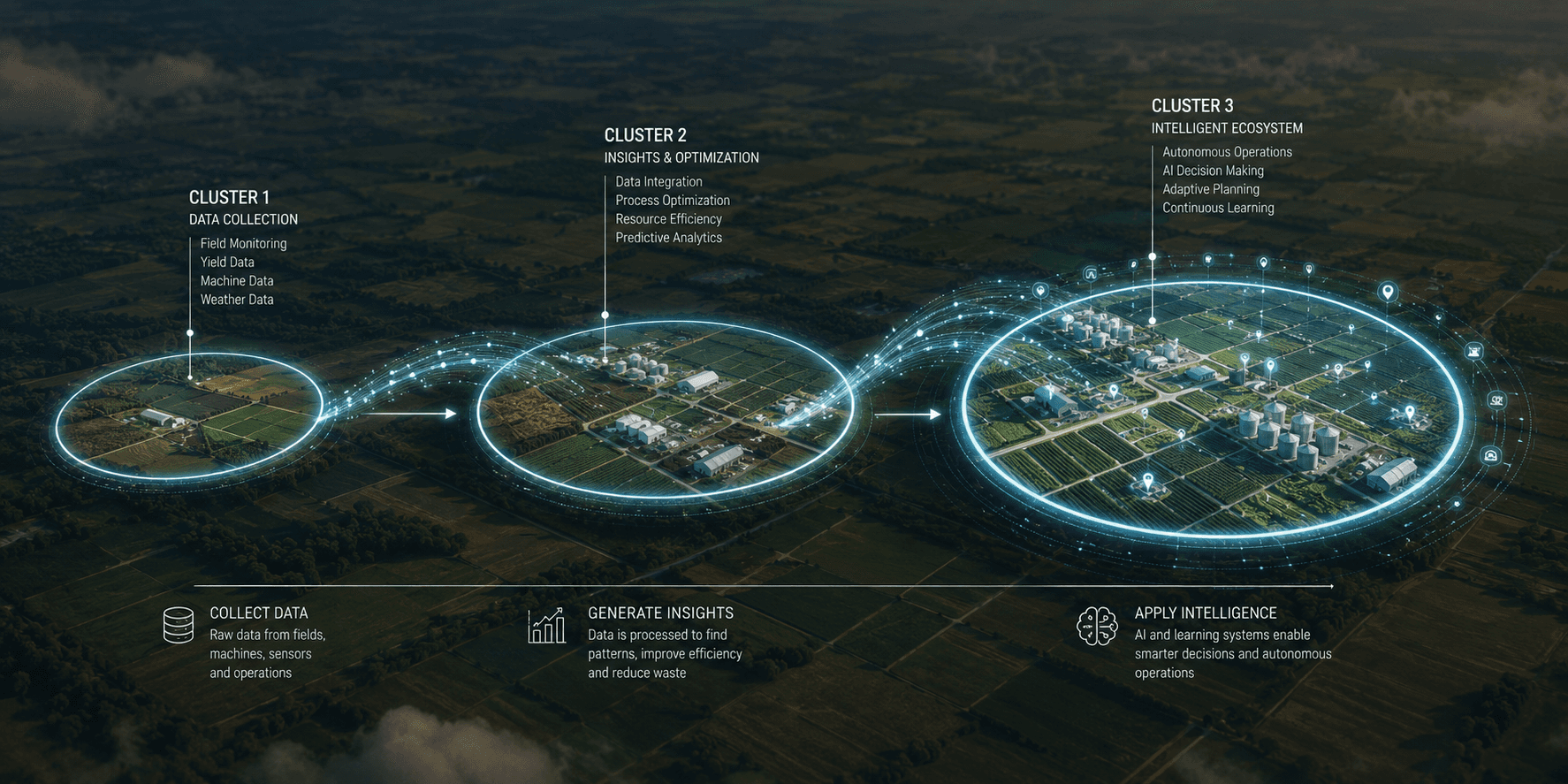
BioSingularity is being created not only to manage a single cluster, but to form a replicable infrastructure model.
Every season should generate operational knowledge: which zones delivered the best results, which irrigation strategies saved water, which soil practices improved productivity, which machinery routes reduced operating costs, which processing schedules increased efficiency, and which early risk signals appeared before financial losses occurred.
This knowledge should become part of the BioSingularity intelligence base. It will improve the current cluster and give each subsequent cluster a stronger starting position.
The first cluster creates proof.
The second cluster should start with better data.
The third cluster should start with a smarter model.
In this way, the system should become not only manageable, but also learning-based: every subsequent launch can become more accurate, faster, and more resilient.
Key points:
BioSingularity is designed to create a replicable infrastructure model, not only manage one cluster
Every season should generate operational knowledge
The system captures what works best across zones, irrigation strategies, soil practices, machinery routes, processing schedules, and risk signals
This knowledge becomes part of the BioSingularity intelligence base
Each cluster improves the current model and gives the next cluster a stronger starting position
Every subsequent launch can become more accurate, faster, and more resilient
BIOSINGULARITY DECISION LIBRARY
Risks, Mistakes, and Successful Decisions as Part of the System

A conventional agricultural project often loses a significant share of its experience after the season ends. Decisions remain in the minds of managers, mistakes are repeated, successful practices are not always documented, and knowledge does not become a systemic asset.
BioSingularity introduces the concept of a decision library - an intelligent knowledge base where operational scenarios, risks, mistakes, successful decisions, financial results, agronomic conclusions, and management protocols will be preserved.
If a particular irrigation scheme produces a better result, the system should store it as a practical scenario. If a logistical error leads to losses, it should become a warning template. If a combination of soil, crop, and fertilizers produces a strong result, it should be added to the intelligence base for future clusters.
In this way, BioSingularity will be able to accumulate not only data, but also management memory, reducing the likelihood of repeating the same mistakes when the model is replicated.
Key points:
Conventional agricultural projects often lose experience after a season ends
Decisions remain in managers’ heads, mistakes are repeated, and successful practices are not always documented
BioSingularity creates a decision library as an intelligent knowledge base
The library preserves operational scenarios, risks, mistakes, successful decisions, financial results, agronomic conclusions, and management protocols
Strong irrigation schemes, logistical errors, and successful combinations of soil, crop, and fertilizers become reusable intelligence
BioSingularity accumulates management memory and reduces repeated mistakes during replication
DECISION INTELLIGENCE FOR THE STATE AND INVESTORS
Turning Complexity into Trust

A 100,000-hectare food infrastructure cluster is too complex to be assessed solely through standard agricultural reporting.
The state needs to understand the food security impact. The investor needs to understand capital risk and financial performance. Financial partners need to see compliance with standards, ESG, safeguards, and long-term operational discipline.
Decision intelligence must translate the complexity of the cluster into clear management dashboards for each stakeholder.
For the state, it can show domestic food production, import substitution, employment, regional development, and the project’s contribution to national resilience.
For the investor, it can show capital deployment, operational KPIs, risk signals, production dynamics, cash flow forecasts, EBITDA scenarios, and asset utilization efficiency.
For financial partners, it should support transparency, auditability, ESG evidence, MRV data, impact reporting, and monitoring of obligations.
When data is transparent, capital can trust the project more easily. When risk is visible, it can be managed. When impact is measured, the project stops being a promise and becomes an infrastructure asset.
Key points:
A 100,000-hectare food infrastructure cluster cannot be evaluated only through standard agricultural reporting
The state needs visibility into food security impact
Investors need visibility into capital risk and financial performance
Financial partners need evidence of standards, ESG, safeguards, and long-term operational discipline
Decision intelligence translates cluster complexity into clear management dashboards for each stakeholder
Transparent data, visible risk, and measurable impact turn the project from a promise into an infrastructure asset
FROM DIGITAL CONTROL TO INTELLIGENT FOOD INFRASTRUCTURE
From Digital Control to Intelligent Food Infrastructure
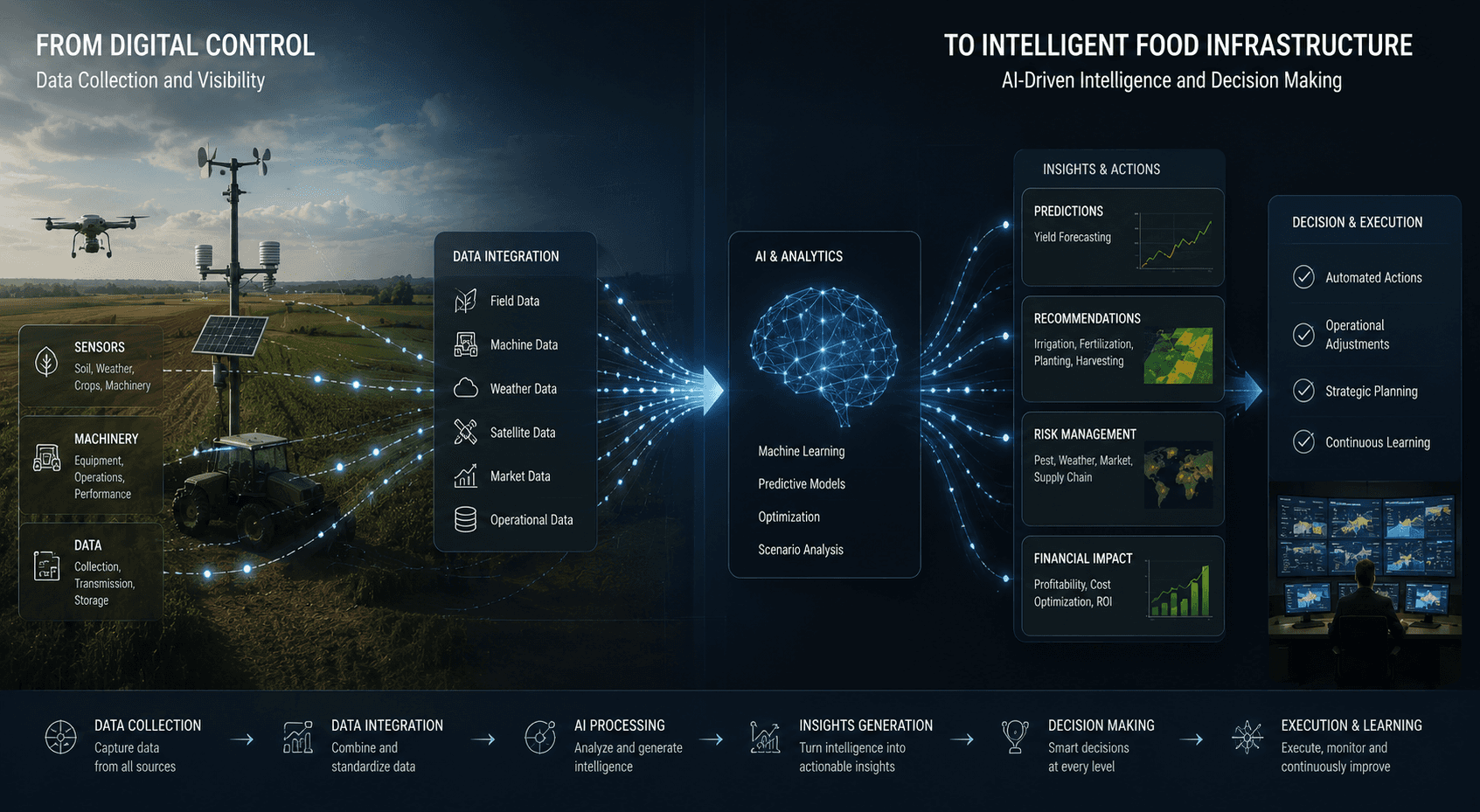
Digitalization answers the question: what is happening in the system.
Artificial intelligence must answer the next question: what does it mean, and what decision should be made?
BioSingularity is not limited to the task of collecting data. Its technology architecture incorporates the ability to connect data, compare it, interpret it, identify deviations, detect patterns, forecast consequences, and help the system become better.
AI must make food infrastructure more predictable, transparent, manageable, and suitable for replication.
BioSingularity forms the foundation for moving agriculture into a new category: intelligent national food infrastructure.
Key points:
Digitalization explains what is happening in the system
Artificial intelligence explains what it means and what decision should be made
BioSingularity goes beyond data collection
Its architecture connects, compares, interprets, and analyzes data
It identifies deviations, detects patterns, forecasts consequences, and helps the system improve
AI makes food infrastructure more predictable, transparent, manageable, and replicable
FINAL MEANING OF THE SECTION
BioSingularity AI as a Learning Food Infrastructure System

BioSingularity AI is the intelligent layer designed to transform food infrastructure into a learning system.
It is designed to do more than collect data: to detect deviations, understand connections, and compare scenarios. To support decision-making, reduce repeated mistakes, and strengthen the operator. To increase investor trust, make every season more precise, and make every subsequent cluster smarter than the last.
This is a transition from agriculture as manual management to food infrastructure as an intelligent system that can be designed, managed, verified, improved, and replicated.
Key points:
BioSingularity AI transforms food infrastructure into a learning system
It moves beyond simple data collection
It detects deviations, understands connections, and compares scenarios
It supports decisions, reduces repeated mistakes, and strengthens the operator
It increases investor trust and improves the precision of every subsequent season
It makes every next cluster smarter than the previous one and enables agriculture to become an intelligent, designable, manageable, verifiable, improvable, and replicable infrastructure system